


A chipped tooth from biting into an apple at the wrong angle. A gap that shows up in every photo. A shade of yellow that no amount of whitening toothpaste seems to fix. These are the kinds of small imperfections that send people searching for cosmetic dental work, and two of the most common fixes are composite bonding and porcelain veneers.
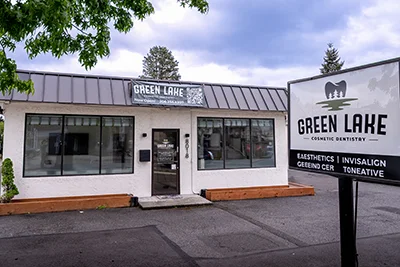
At Green Lake Cosmetic Dentistry, we help patients throughout Seattle make this call every week, walking you through the details of each option before you ever sit down for a consultation. Both treatments fall under our cosmetic dentistry services, and understanding how each one works makes the decision much easier.
What Composite Bonding Can Do for Your Smile
Cosmetic bonding uses a tooth-colored resin that we apply directly to your tooth, sculpt into the shape you want, and harden with a curing light. The entire process can often be completed in a single visit, and it works especially well for smaller corrections like chips, small gaps, or minor discoloration on one or two teeth. The resin bonds directly to your existing enamel, so we typically remove very little of your natural tooth structure, which many patients appreciate when they want a conservative approach.
Bonding is also one of the more budget-friendly cosmetic options we offer, though the resin can wear down or pick up stains over time, especially around coffee, tea, or red wine. Most patients find that a quick touch-up every few years keeps their bonded teeth looking fresh.
Why Patients Choose Porcelain Veneers
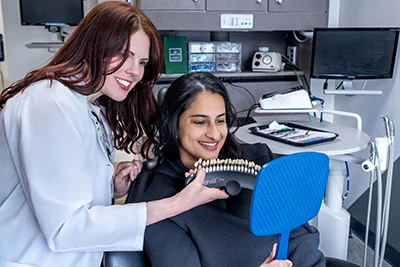
Porcelain veneers are thin, custom-made shells that we bond to the front surface of your teeth, and they tend to deliver a more dramatic and longer-lasting transformation than bonding alone. Veneers are crafted from porcelain, so they resist staining far better than composite resin, and your smile stays bright for years without the touch-ups bonding sometimes needs.
Getting veneers takes a bit more time than bonding since we prepare your teeth, take impressions, and often place temporary veneers while your permanent set is crafted in a dental lab. A recent systematic review published through the National Institutes of Health found that porcelain veneers had a 10-year survival rate of 95.5 percent, which reflects just how reliable this option can be when it is placed and cared for correctly.
Solving Multiple Concerns at Once
Veneers are also a strong choice for patients dealing with multiple concerns at once, such as uneven sizing, minor gaps, and discoloration, since we can address all of them with one cohesive treatment. Many patients tell us that veneers give them the confidence to smile freely in photos again.
How to Decide Which Option Fits Your Smile
Choosing between bonding and veneers depends on a handful of personal factors, and thinking through each one can help you feel confident before your consultation. Here is what we recommend considering as you weigh your options.
- Budget: Bonding typically costs less upfront than veneers, since it uses less material and requires less lab work.
- Timeline: Bonding can often be finished in one appointment, while veneers usually take two or more visits to complete.
- Longevity: Veneers tend to hold their color and shape longer than bonding, which can wear or stain sooner with daily use.
- Extent of correction: Bonding suits small, isolated fixes, while veneers work well for more comprehensive changes, similar to a full smile makeover.
- Maintenance: Bonding may need occasional touch-ups over time, while veneers generally require only routine care and cleanings.
Many patients find that a mix of the two treatments works best, using bonding for a minor fix on one tooth and veneers for a more visible section of their smile. Whichever route fits your needs, the goal is always a result that looks natural and feels like it truly belongs in your mouth.
Green Lake Cosmetic Dentistry Is Here to Help You Decide
Dr. Cherryl Ellison and our team at Green Lake Cosmetic Dentistry have helped patients throughout Seattle achieve smiles they are proud to show off, whether that means a single bonded tooth or a full set of veneers. Trained at Indiana University and an active member of the Spear and Seattle Study Clubs, Dr. Ellison stays current on the latest techniques, so your treatment plan reflects what actually works, not just what is trending.
We also offer flexible ways to make treatment affordable, including interest-free Cherry financing for 12 months and an in-house membership plan for patients without dental insurance. If you are ready to talk through composite bonding, porcelain veneers, or a combination of both, contact our office to schedule your consultation.